
Powering Somalia’s Next Generation of Green Entrepreneurs
Six renewable energy startup concepts emerged from an intensive entrepreneurship programme at ICE Institute, SIMAD University, connecting practical business education with Somalia’s energy transition and economic development priorities.
Mogadishu, Somalia | 21 November 2026
What does Somalia’s energy transition look like beyond solar panels and electricity generation? For a group of aspiring young entrepreneurs in Mogadishu, it could mean preserving fish through solar-powered refrigeration, reducing agricultural irrigation costs, converting organic waste into cooking energy, or making clean drinking water more accessible.
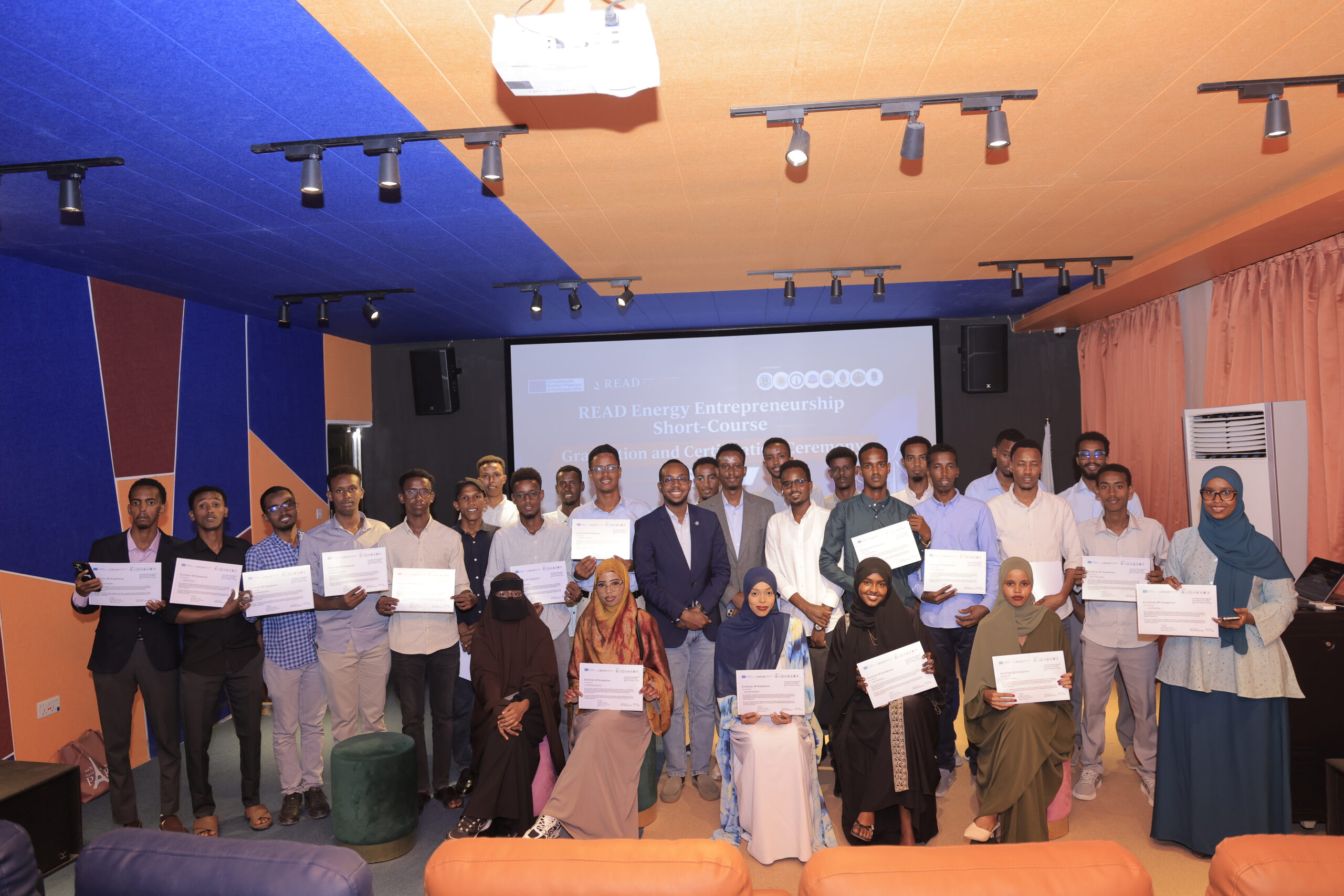
These were among six startup concepts developed through the Energy Entrepreneurship Short-Course, delivered at SIMAD University under the European Union co-funded Renewable Energy Advancement for Inclusive Development in Sub-Saharan Africa (READ) Project.
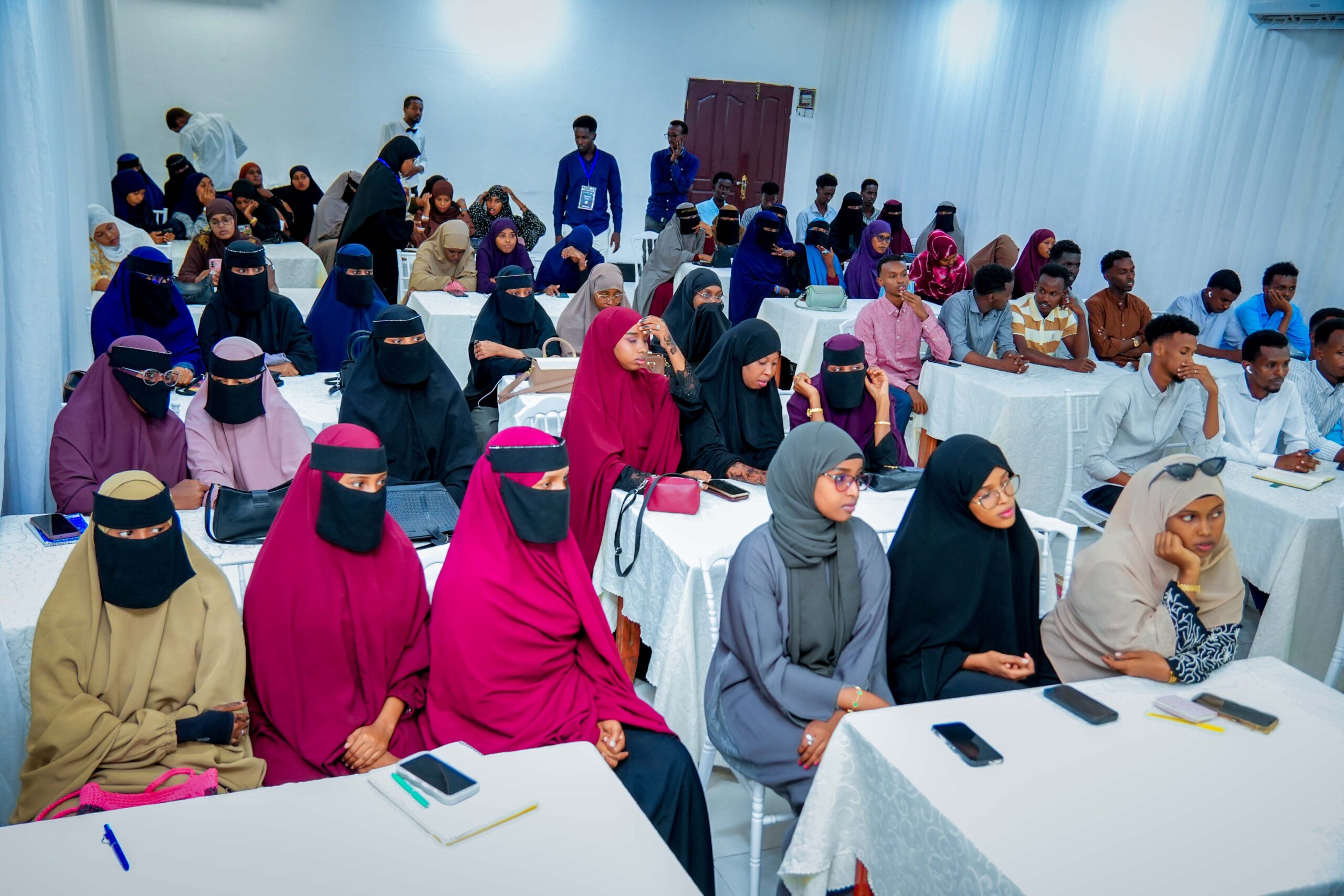
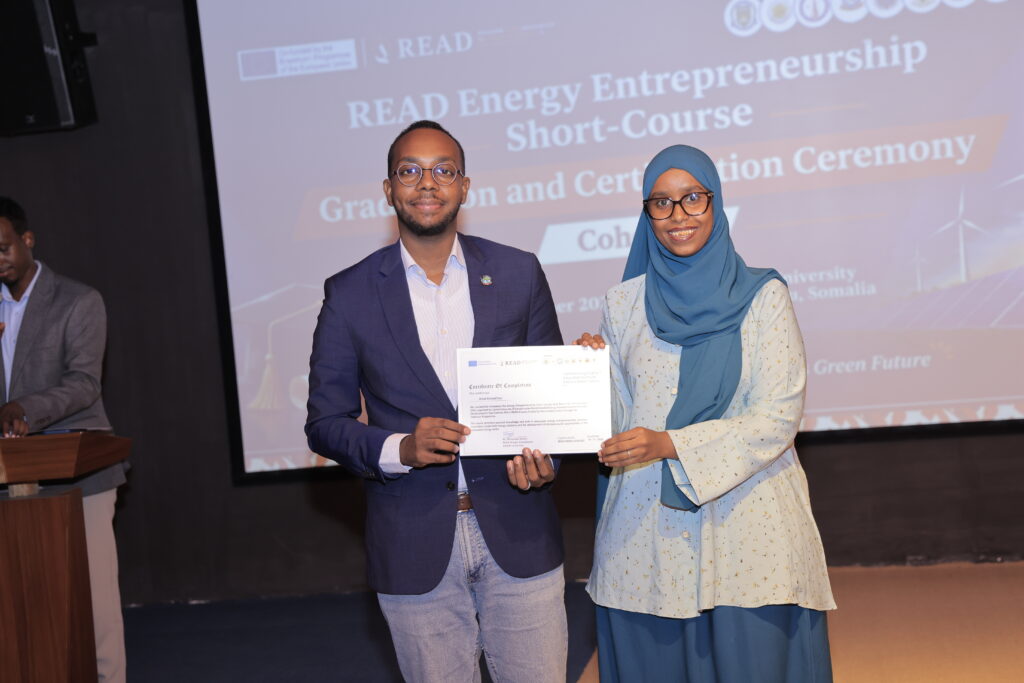
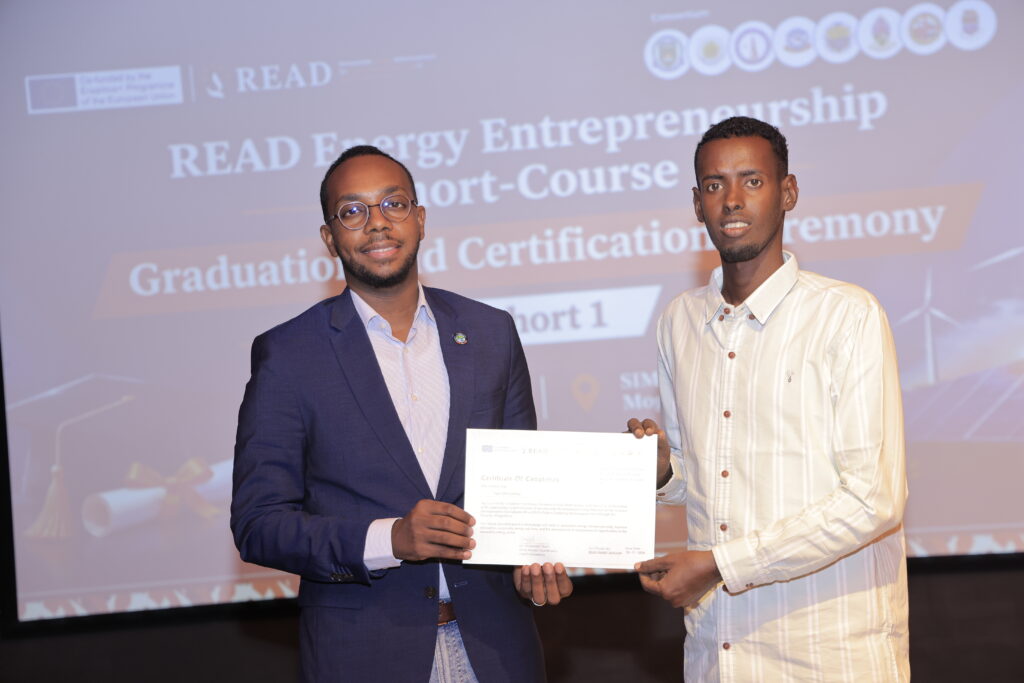
Launched on 2 November 2026, the programme brought together more than 50 aspiring entrepreneurs, competitively selected from several universities in Mogadishu, to explore how renewable energy technologies could be translated into viable businesses.
The training combined four modules, six interactive sessions and 18 contact hours, followed by a startup pitching competition and graduation activities. Participants worked in teams to identify market opportunities, develop business models and prepare investment pitches addressing practical challenges in Somalia.
From Energy Challenges to Entrepreneurial Opportunities
The programme was designed around a central objective: strengthening participants’ practical capabilities to identify, develop and evaluate business opportunities within the renewable energy sector.
Delivered in Somali at SIMAD University’s Town Campus, the course brought together seven facilitators with expertise in entrepreneurship, renewable energy, innovation, business development and financing.
The programme opened on 2 November with Module 1, Energy Entrepreneurship Fundamentals, facilitated by Mr. Mohamed Okash and Ms. Samira Hared. The session introduced participants to renewable energy entrepreneurship, opportunity identification and value proposition development.
Module 2 focused on Renewable Energy Business Models and Lean Startup. On 8 November, Mr. Hassan Jakuula facilitated a session on renewable energy business models, followed on 9 November by Mr. Abdiwahab Isak, who guided participants through lean startup approaches, customer validation and the importance of testing business assumptions.
On 12 November, Mr. Liban Hassan delivered Module 3, Business Planning and Venture Development, covering business planning, partnerships, implementation considerations and enterprise sustainability.
The final module, Financing and Investment Readiness, was delivered in two parts. Mr. Mustafa Hajji facilitated financing and investment readiness on 14 November, while Mr. Okash led investor pitch preparation on 16 November, helping participants refine their business propositions and communicate them to prospective investors and partners.
Throughout the six sessions, participants progressively developed their startup concepts, moving from initial ideas towards structured business models, implementation plans, financing proposals and investment presentations.
The emphasis was on practical learning rather than theoretical instruction alone.
Six Startup Concepts Addressing Somalia’s Development Challenges
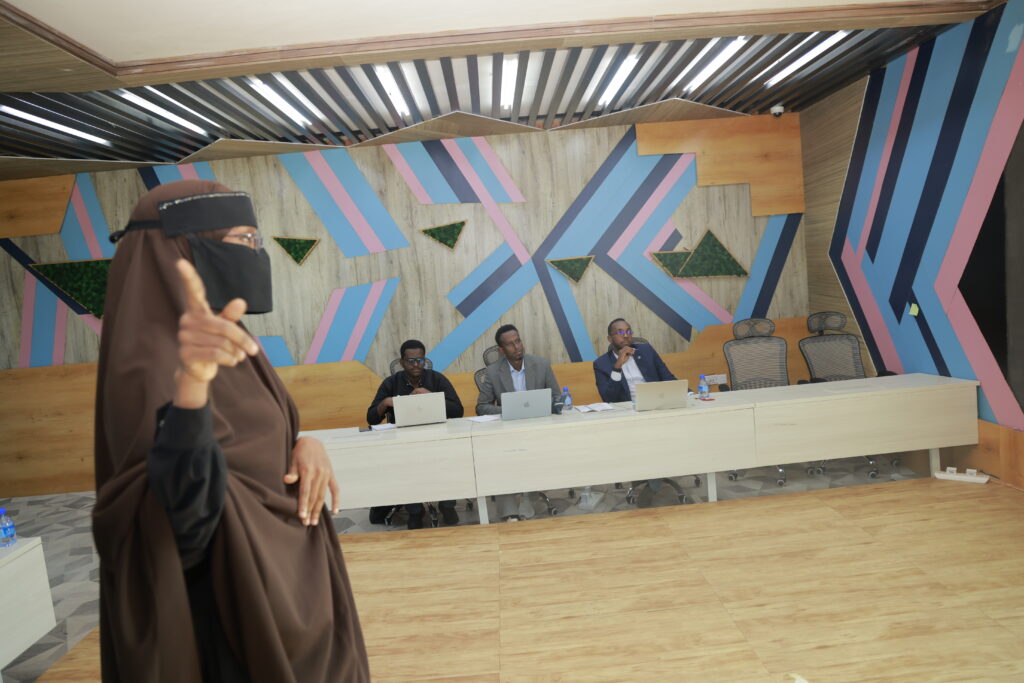
The entrepreneurial journey culminated on 17 November 2026, when participants presented six renewable energy business concepts during Pitching Day.
The presentations were evaluated by a panel comprising Mr. Mohamed Okash, Mr. Liban, and Mr. Hassan who assessed the proposed ventures and provided feedback on their market potential, business models and implementation prospects.
The six concepts demonstrated the breadth of business opportunities associated with Somalia’s emerging green economy.
1. Solar Cold Storage proposed solar-powered refrigeration facilities to preserve fish and reduce post-harvest losses among fishers and traders in Mogadishu.
2. SunPump Somalia developed an affordable solar irrigation business concept with flexible payment arrangements to help smallholder farmers reduce reliance on expensive diesel-powered pumps.
3. Solar Food Dryer explored the use of solar-powered drying technology to preserve agricultural produce, reduce food waste and create additional market opportunities for farmers and traders.
4. 2MAS BioEnergy proposed converting food waste and livestock manure into biogas and potentially usable organic fertilizer, promoting resource recovery and circular economy practices.
5. SolarBlock introduced a solar-powered concrete block manufacturing concept aimed at improving production efficiency, product quality and delivery reliability within Somalia’s growing construction sector.
6. SunSpring Somalia proposed solar-powered water purification systems and affordable drinking-water services for households, institutions and underserved communities.
Although the ventures remain at the concept and validation stages, their diversity illustrates an important opportunity: renewable energy entrepreneurship can contribute to productive economic sectors, not merely electricity supply.
Beyond the Classroom: Developing Skills That Matter
The programme’s impact extends beyond the six final presentations. Participants were introduced to the practical challenges of developing enterprises, including understanding customers, estimating costs, selecting appropriate revenue models, managing financial risks and communicating value to potential investors.
Several teams identified assumptions requiring further testing. The Solar Food Dryer team, for instance, reported interviewing 20 potential customers, of whom 14 expressed interest in its proposed solution. Such early findings provide useful direction for further validation, although customer interest does not necessarily translate into purchasing decisions.
Other teams proposed testing customer willingness to pay, conducting technical feasibility assessments, developing prototypes and establishing relationships with equipment suppliers or local industry partners.
These activities reflect a critical learning outcome: entrepreneurship is not simply about developing innovative ideas, but about building the evidence, capabilities and partnerships required to make those ideas work.
The course also strengthened opportunities for interdisciplinary collaboration, teamwork, problem-solving and entrepreneurial communication.
Connecting Education, Industry and Green Enterprise Development
The READ initiative recognizes that expanding renewable energy education must be accompanied by opportunities for practical application and stronger connections between universities and industry.
The Energy Entrepreneurship Short-Course contributes to this objective by introducing an applied learning model through which participants can explore enterprise development alongside technical and business knowledge.
The next stage will focus on connecting participants with further learning, professional experience and industry engagement opportunities, including placements and internships envisioned under the READ Project.
For promising venture teams, additional mentorship, customer research and technical support could provide pathways towards prototype development and market testing. For the Institute of Climate and Environment (ICE Institute), the initiative reinforces its commitment to developing local capacities, promoting green innovation and helping young people contribute to Somalia’s sustainable development.
It also demonstrates how collaboration between higher education institutions, entrepreneurs and industry practitioners can help build the human capital needed for a more productive and inclusive energy transition.
Investing in the Entrepreneurs Behind Somalia’s Energy Transition
As the first cohort concluded its learning and pitching activities, the immediate results were tangible: more than 50 aspiring entrepreneurs engaged at the programme’s launch, six structured training sessions delivered, and six renewable energy venture concepts presented.
Yet the significance of the initiative lies equally in what comes next.
Transforming these concepts into functioning enterprises will require continued validation, mentorship, technical expertise, access to finance and partnerships with industry.
Somalia’s energy transition will ultimately depend not only on the technologies deployed, but also on the people equipped to create businesses, develop solutions and generate lasting economic value from renewable energy. Through READ, SIMAD University and its partners are helping lay that foundation—one entrepreneur, one business concept and one practical learning opportunity at a time.
The Renewable Energy Advancement for Inclusive Development in Sub-Saharan Africa (READ) Project is co-funded by the European Union through the Erasmus+ Programme and coordinated by SIMAD University. The project brings together eight higher education institutions from Somalia, Tanzania, Malawi, Italy and Türkiye to strengthen renewable energy education, research, innovation and cooperation for inclusive development.