
ICE Institute Participates in Emerging Adaptation Fellowship Writeshop in Accra
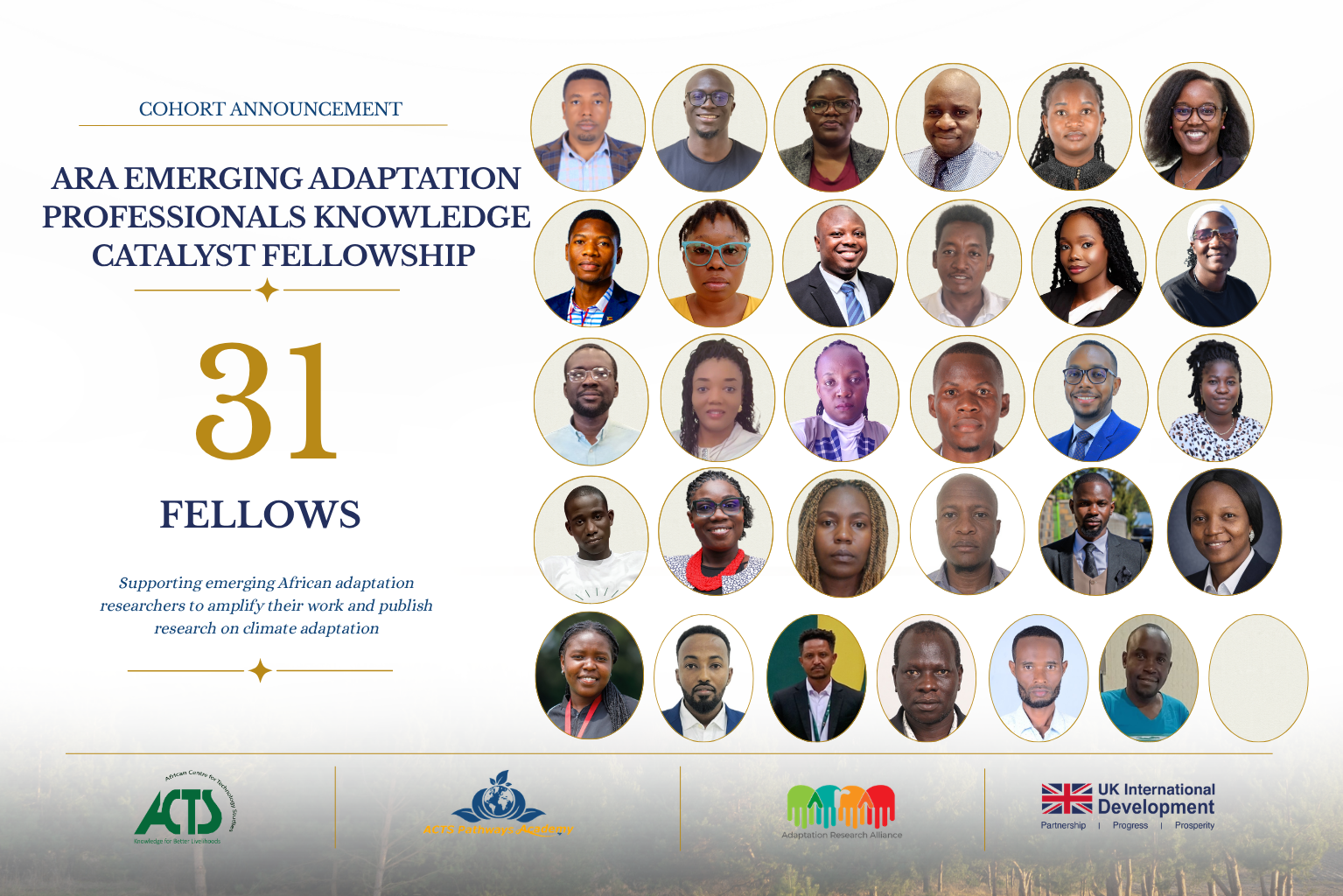
The Institute of Climate and Environment (ICE Institute) at SIMAD University is proud to announce that its Director, Mohamed Okash, was selected as one of 31 Emerging Adaptation Professionals (EAPs) from across Africa for the prestigious Adaptation Research Alliance (ARA) Knowledge Catalyst Fellowship.
The six-month fellowship, running from March to August 2026, is implemented by the African Centre for Technology Studies (ACTS) through the ACTS Pathways Academy (APA) in partnership with the Adaptation Research Alliance (ARA). The programme supports outstanding early-career researchers, practitioners, postgraduate students, PhD candidates, and postdoctoral fellows to strengthen adaptation research, scientific writing, and policy engagement while increasing African representation in global climate adaptation knowledge.
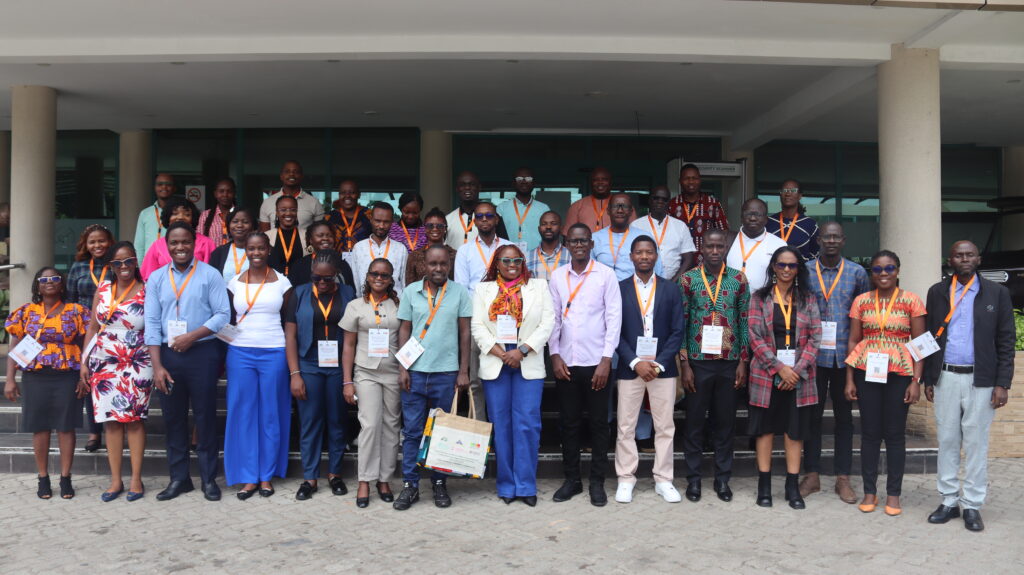
As part of the fellowship, the 20 fellows from different African countries convened in Accra, Ghana, from 15–17 June 2026 for the Research Symposium and Writing Workshop. The fully funded event brought together fellows, leading researchers, and expert facilitators to accelerate the publication of high-quality adaptation research and strengthen collaboration across the continent.
Advancing African Adaptation Research
The three-day symposium served as an intensive platform for learning, collaboration, and professional development. Fellows presented their ongoing research to peers and expert reviewers, receiving constructive feedback to strengthen the quality and policy relevance of their manuscripts.
The workshop also provided practical training on:
1, Academic and policy-oriented scientific writing
2. Navigating peer-review and editorial processes
3. Science communication for wider public engagement
4. Publishing adaptation research in high-impact journals
5. The Global Goal on Adaptation and its implications for African researchers
6. Building professional networks and collaborative research partnerships across Africa
Dedicated writing and mentorship sessions enabled fellows to refine their manuscripts while benefiting from one-on-one guidance from experienced researchers and editors. The programme also created opportunities to exchange experiences and explore common adaptation challenges facing African countries, from climate resilience and food systems to natural resource governance and climate finance.
Learning from Adaptation in Practice
Beyond the classroom sessions, the workshop concluded with an inspiring field visit that connected research with practical implementation.
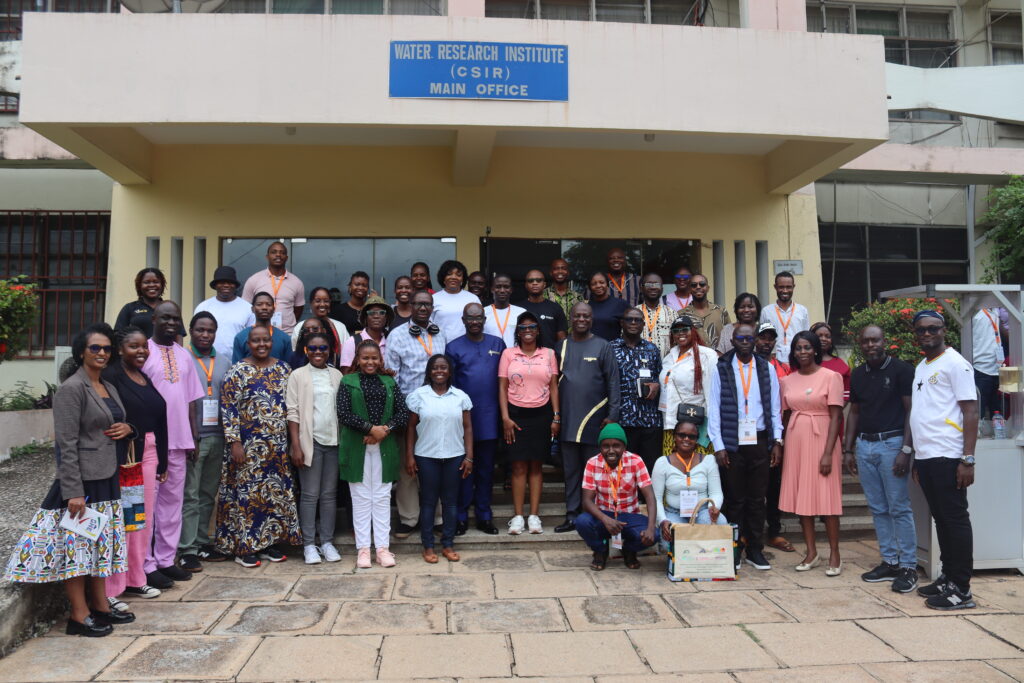
The fellows visited the Council for Scientific and Industrial Research (CSIR) Water Research Institute, where researchers demonstrated ongoing work on water resource management, climate resilience, and scientific innovations supporting sustainable development in Ghana. The visit highlighted the critical role that research institutions play in generating evidence that informs policy and strengthens climate adaptation.
The delegation also visited GAYO (Global Action Youth Organization), a local civil society organisation implementing community-based resilience and environmental sustainability initiatives. Through discussions with practitioners, fellows gained valuable insights into locally led adaptation, youth engagement, and community-driven solutions that are improving livelihoods while protecting ecosystems.
A particularly memorable stop was a recycling facility where different waste streams—including plastic, textiles, and other recyclable materials—are collected, sorted, and transformed into new products. The visit demonstrated how circular economy approaches can simultaneously reduce pollution, create green livelihoods, conserve natural resources, and protect the environment from increasing waste. Witnessing these practical innovations reinforced the importance of linking research with scalable, community-centred solutions.
Strengthening ICE Institute’s Global Research Engagement
For ICE Institute, this achievement reflects our growing contribution to climate adaptation research and international policy dialogue. As a proud member of the Adaptation Research Alliance (ARA), ICE continues to expand its role in producing evidence-based research, strengthening local capacities, and connecting Somali perspectives with global adaptation conversations.
The knowledge, mentorship, and partnerships established through the Knowledge Catalyst Fellowship will directly strengthen the Institute’s research agenda and enhance our ability to produce impactful scientific publications, inform public policy, and support locally led climate adaptation initiatives in Somalia.
Climate adaptation is one of the defining development challenges of our time. Addressing it requires not only rigorous science but also strong partnerships, local leadership, and practical solutions. Participating in the ARA Knowledge Catalyst Fellowship represents another important milestone in ICE Institute’s mission to build a climate-resilient, greener, and more sustainable Somalia while contributing African knowledge to global climate action.
We extend our sincere appreciation to the Adaptation Research Alliance (ARA), the African Centre for Technology Studies (ACTS), the ACTS Pathways Academy, the facilitators, mentors, and fellow participants for creating an exceptional learning experience and fostering a vibrant community of African adaptation researchers committed to transforming knowledge into action.