
State of Climate in Somalia 2026: Trends, Risks, and Pathways to Resilience
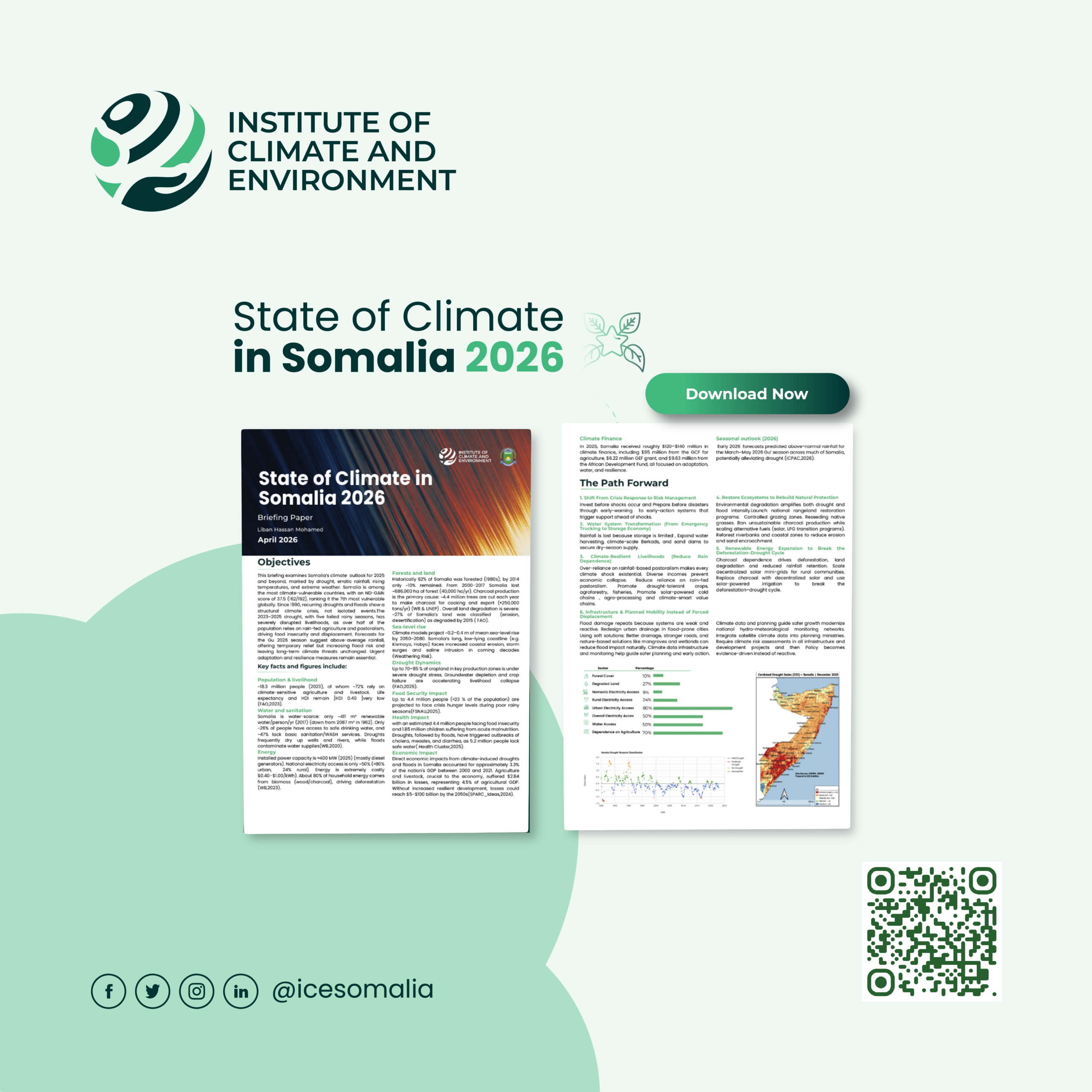
Somalia is facing an escalating climate crisis marked by recurrent droughts, erratic rainfall, rising temperatures, and increasing extreme weather events. Ranked among the world’s most climate-vulnerable countries with an ND-GAIN score of 37.5 (162/192), Somalia’s climate challenges are no longer isolated shocks but a persistent structural risk affecting livelihoods, food security, and national development.
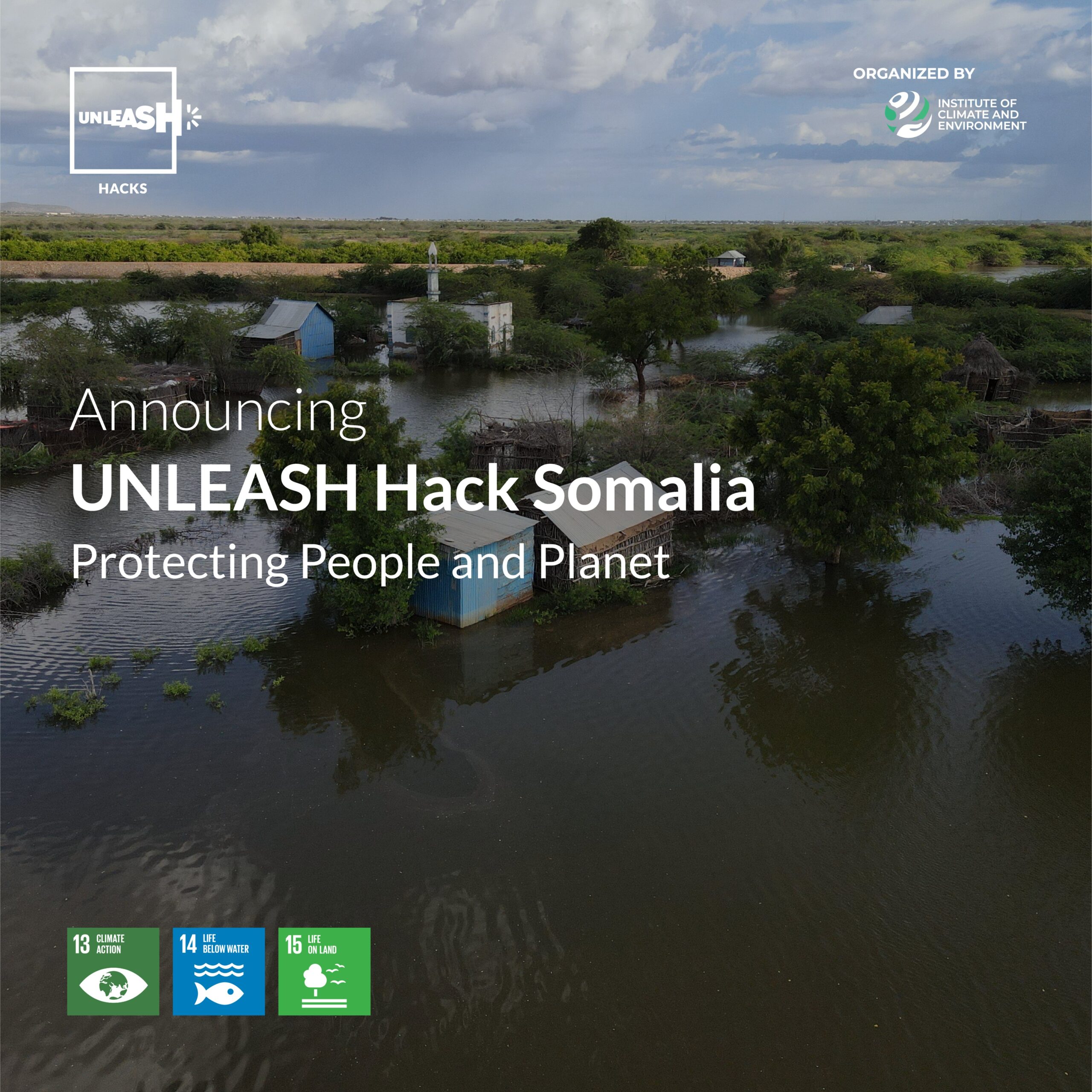
Between 2023 and 2025, five consecutive failed rainy seasons triggered one of the most severe droughts in recent history, disrupting agriculture and pastoral systems on which over 70% of the population depends. While forecasts for the 2026 Gu season are for above-average rainfall, offering short-term relief, they also increase the risk of flash floods—highlighting Somalia’s dual vulnerability to both drought and flooding.
With over 4.4 million people facing food insecurity and critical infrastructure under strain, the economic and human costs of climate change continue to rise. Without urgent investment in climate adaptation, resilience, and sustainable resource management, projected losses could reach up to $100 billion by 2050.
This underscores the urgent need for Somalia to transition from reactive crisis response to proactive climate risk management—through climate-resilient livelihoods, water system transformation, renewable energy expansion, and evidence-based policy planning.