




Investigating the impact of property characteristics, cost of living, and environmental factors on rental prices in Baidoa’s climate-affected real estate market: a hybrid approach using hedonic regression and neural networks
A groundbreaking study published in Frontiers in Sustainable Cities examines how climate conditions, economic factors, and property attributes shape rental prices in Baidoa, Somalia. Conducted by researchers from the Institute of Climate and Environment (ICE), SIMAD University, and other institutions, the study applies a hybrid analytical approach—combining hedonic

Poor governance and weak social cohesion in Somalia’s Climate-stressed settings: the mediating effects of economicin efficiencies and limited human development
A recent study published in Cogent Economics & Finance by Dr. Mohamed Ibrahim Nor and Dr. Mohamed Mahees Raheem explores the intricate relationship between governance failures, economic inefficiencies, and social cohesion in Somalia’s climate-stressed regions. The research utilizes Structural Equation Modeling (SEM) to analyze how poor governance exacerbates eco
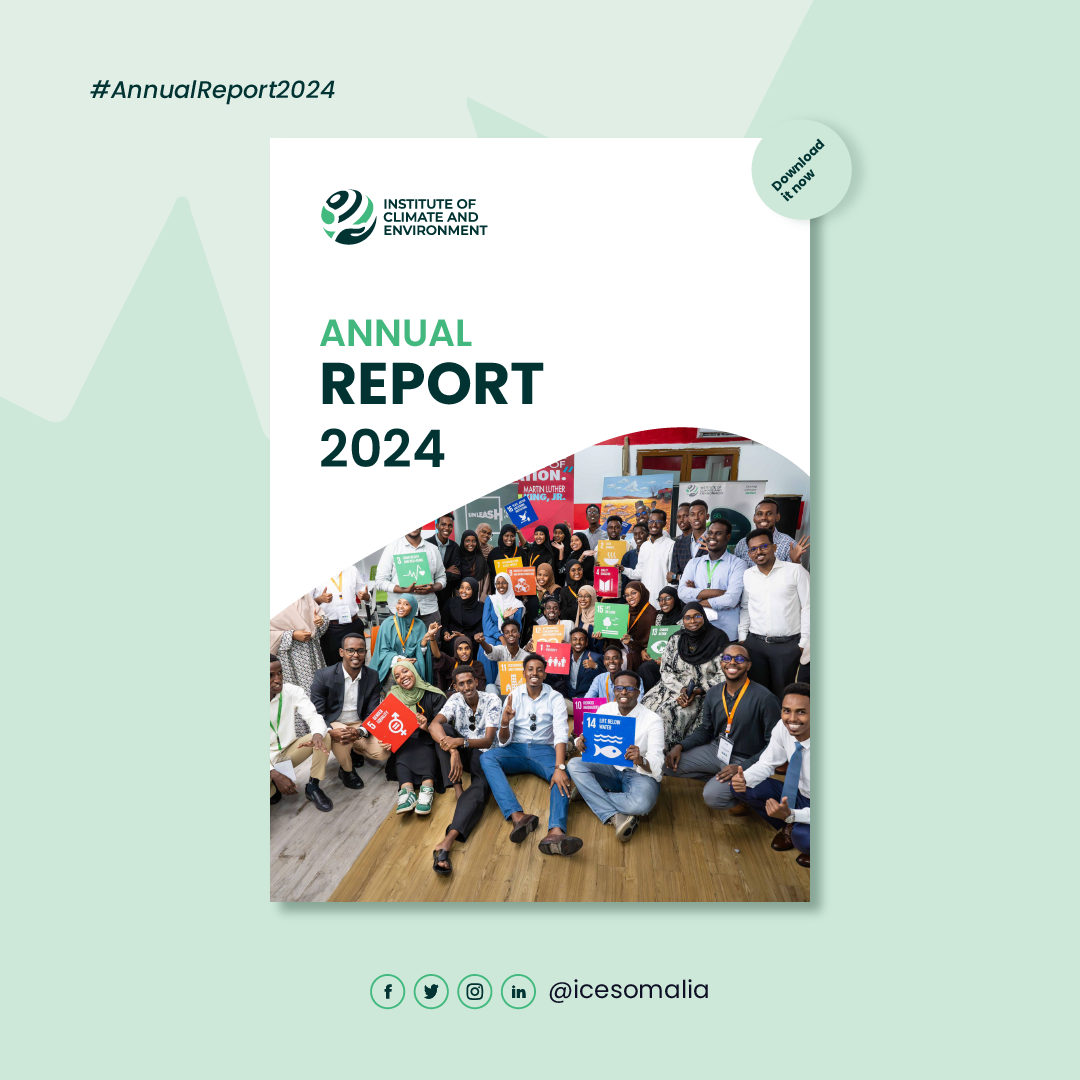
ICE Institute 2024 Annual Report: Driving Climate Action and Resilience in Somalia
The Institute of Climate and Environment (ICE) at SIMAD University has been at the forefront of climate action, research, and policy advocacy, making 2024 a transformative year in building a greener and more resilient Somalia. This year’s achievements demonstrate our unwavering commitment to empowering communities, advancing climate research, and shaping policies th
Approaches to Ecological Sustainability in Sub-Saharan Africa: Evaluating the Role of Globalization, Renewable Energy, Economic Growth, and Population Density
Balancing economic growth with environmental sustainability is a pressing challenge for Sub-Saharan Africa (SSA). This study explores the impact of globalization, renewable energy, economic growth, trade openness, and population density on ecological footprints and CO₂ emissions across 34 SSA nations from 1994 to 2021. Using advanced econometric techniques, includin
Determinants of Agricultural Exports in Somalia: The Role of Exchange Rates, Foreign Direct Investment, and Institutional Quality
Agricultural exports are critical to Somalia’s economy, providing employment, foreign exchange earnings, and economic stability. This study examines the key determinants of agricultural export performance in Somalia from 1985 to 2017, focusing on the impacts of exchange rate fluctuations, foreign direct investment (FDI), and institutional quality. Using an Autoregre

Soomaaliya oo La Filayo Saameynta La Niña: Waa in si Degdeg ah Looga Hortagaa!
Waxaa la saadaalinayaa in La Niña ay ku yeelan doonto saameyn xooggan Soomaaliya, taasoo horseedi karta xaalado cimiladeed oo adag sida abaaro ba’an ama roobab ka hooseeya heerka caadiga ah. Arrintani waxay khatar weyn ku tahay nolol maalmeedka bulshada, gaar ahaan dhinacyada beeraha, biyaha, iyo amniga cuntada. Si looga hortago saameynta La Niña ee soo […]

Communiqué: Mogadishu Environmental Summit 2024
The Mogadishu Environmental Summit 2024 was held on December 5, 2024, at Hotel Jazeera in Mogadishu, Somalia. The summit convened a diverse group of stakeholders, including government representatives, academics, researchers, policymakers, private sector leaders, and civil society actors, to address the environmental challenges facing Somalia. The discussions were cent

Transitioning to Sustainable Energy and Enhanced Environmental Quality in Somalia
As Somalia navigates its path toward sustainable development, this study explores the interplay between renewable energy, trade openness, globalisation, and environmental sustainability. Using annual data from 1990 to 2019 and employing advanced econometric models, the study reveals a significant long-run relationship among these factors. Findings indicate that renewa
Pathways to sustainable development in Somalia: evaluating the impact of agriculture, renewable energy, and urbanisation on ecological footprints and CO2 emissions
The paper investigates the environmental impacts of agriculture, renewable energy, economic growth, and urbanization on Somalia’s ecological footprints and CO2 emissions, using time-series data from 1990 to 2020. The findings reveal that while agriculture and renewable energy significantly reduce both ecological footprints and CO2 emissions in the long run, agri
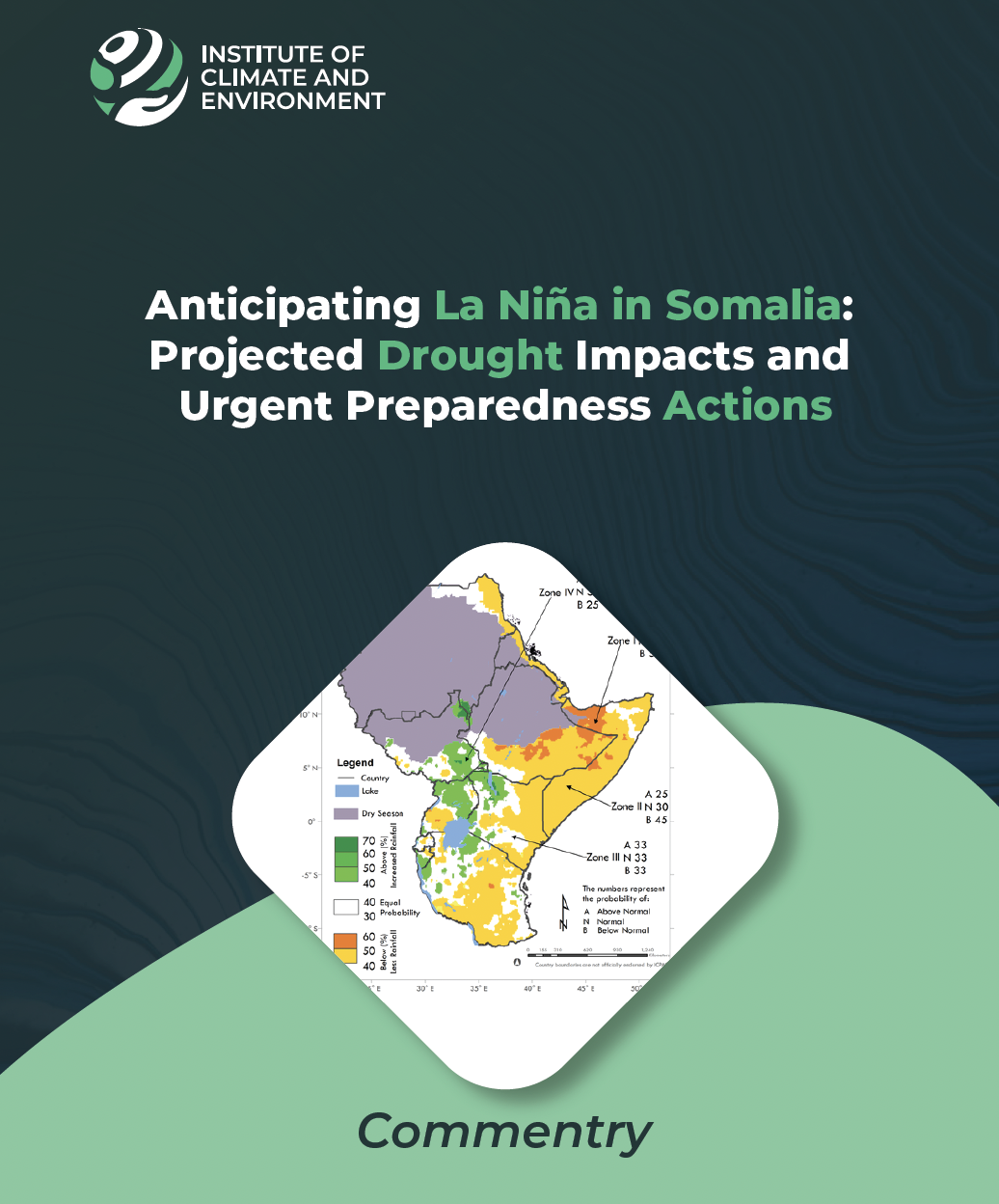
Anticipating La Niña in Somalia: Urgent Preparedness Needed!
Somalia is projected to face severe drought conditions with below-average rainfall, posing serious risks to agriculture, water resources, and food security. This comes after the devastating El Niño-induced flooding of 2023, which displaced millions and caused widespread damage. To mitigate the potential crisis, ICE highlights key actions, including enhancing early wa