

Climate Change Symposium on Youth and Children 2023
From 23rd – 24th October 2023, the Institute of Environment and Climate Change (ICE) at SIMAD University partnered with Save the Children Somalia to host a crucial two-day Climate Change Symposium for Youth and Children in Mogadishu. The event aimed to address climate change while protecting the rights of Somalia’s youth and children. This symposium [&hell

Mogadishu Environmental Summit Concluded Successfully
On 3rd October, the 2nd edition of Mogadishu Environmental Summit (MES) 2023 concluded successfully after three days of gathering and conversation on water issues. The theme of this year was “Somalia and the water crisis: Moving Beyond Projects” since water issues are a fundamental contributing factor to climate change. The Summit was organized by Action […

Reflecting on the ChangemakerXchange Summit 2023 in Rwanda
From September 18th to 22nd, 2023, we had the incredible opportunity to attend the ChangemakerXchange Summit in the serene and picturesque setting of Rwamagana, Rwanda. This summit brought together dedicated young social innovators from Sub-Saharan Africa, and it was a transformative experience that left a profound mark on us all. One of the focus of […]

ICE Institute Joins at the African Climate Summit 2023
Climate change is a global catastrophe with no boundaries. Though it has an influence everywhere on the globe, its impact is not uniform. Nowhere is the climate crisis more obvious than in Africa, a region with particular climatic vulnerabilities and concerns. The first-ever Africa Climate Summit (ACS) was conducted in response to these difficulties, offering [&hellip
ICE Institute Joins Forces with YOUNGCO to Empower Youth for Climate Action in Somalia
In pursuit of our noble mission to capacitate the young generation and tackle climate, environment, and development challenges, the Institute of Climate and Environment (ICE) at SIMAD University embarked on a momentous journey last week. We are thrilled to announce our collaboration with the esteemed YOUNGCO, the official children and youth constituency of the United
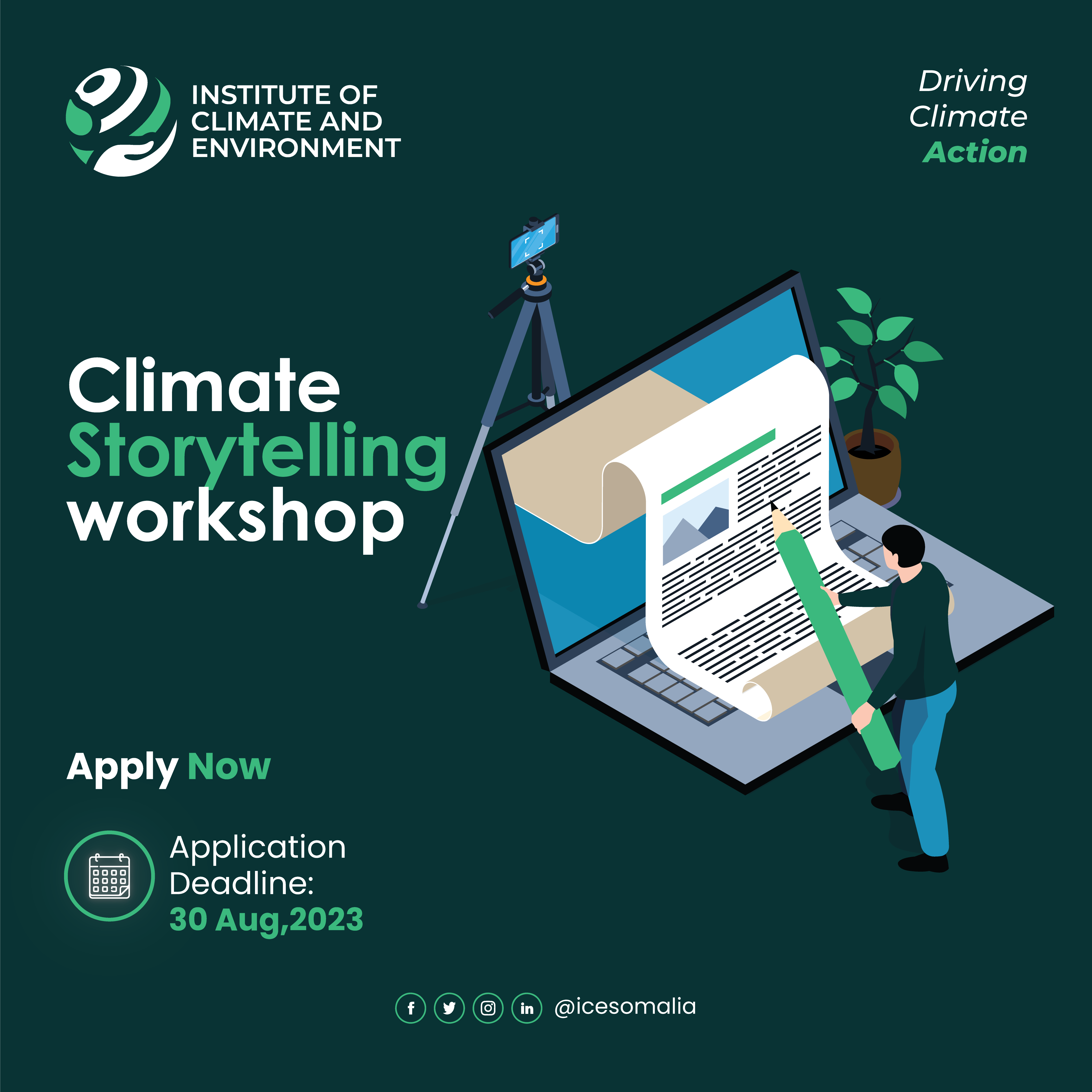
Announcement: Climate Storytelling Workshop
Extreme climate events are becoming the norm in Somalia. In the past three decades, the country has faced many ecological crises. The natural environmental ecosystems in Somalia face significant challenges. The country has grappled with climate change, biodiversity loss, land degradation and weak environmental governance. on the other hand, there are climate entrepren

Validating the Stakeholder Engagement Framework for the National Adaptation Plan (NAP)
Climate Adaptation is one of the effective measures to deal with climate crises in the most affected areas. Somalia is not an exception to these realities, and there are ongoing efforts to adopt National Adaption Plan for Somalia. It is essential to include all stakeholders in the struggle against the growing threats posed by […]

Climate Conversations: Empowering Local Communities for Climate Action in Mogadishu
We are thrilled to announce an exciting new initiative aimed at empowering our local communities to take meaningful action in the face of climate change. The ICE Institute, in collaboration with the Global Shapers community Mogadishu Hub, is launching a series of engaging workshops, town hall meetings, and community-led dialogues under the banner of “Climate [&h

World Environment Day 2023: Beating the Plastic Pollution in Mogadishu
On 5th June 2023, ICE Institute celebrated World Environment Day to be part of the global movement of beating plastic pollution in Mogadishu. By empowering our green community, and students, we organized various activities including plastic cleaning, awareness raising and many others. As part of our impact pathways to capacitate the local communities through awareness

World Oceans Day 2023: Advancing Sustainability through Arts and Dialogue
On 8th June, ICE Institute hosted a fireside chat and art exhibition to commemorate World Oceans Day. The event aimed to deeply understand the state of Somali oceans and raise awareness of ways to conserve and promote the tides of the ever-changing ocean since Somalia has the longest coast in Africa which rich resources and […]