
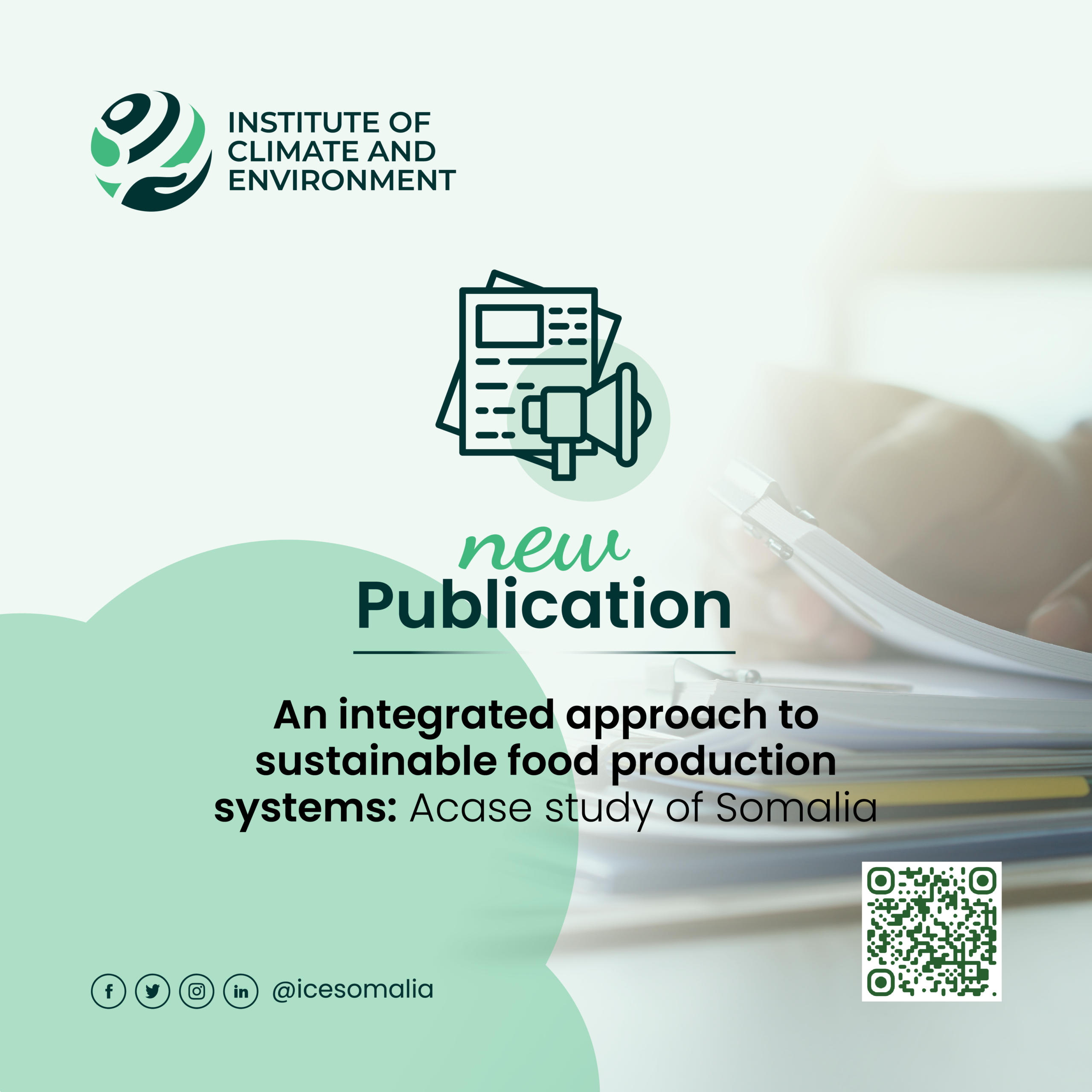
An Integrated Approach to Sustainable Food Production Systems: A Case Study of Somalia
A newly published study by researchers from the Institute of Climate and Environment (ICE) and the Faculty of Economics explores the structural factors shaping food production in Somalia. Moving beyond conventional agricultural perspectives, the research examines how fisheries, industrial development, governance quality, and income inequality interact to influence long-term food production outcomes.
Using data from 1991–2020 and advanced econometric analysis, the study finds that capture fisheries, industrial growth, and stronger institutions significantly contribute to improved food production, while income inequality undermines productivity and food system performance. The findings highlight the importance of adopting an integrated food systems approach that combines sustainable fisheries management, agro-industrial development, institutional strengthening, and inclusive economic policies. The study concludes that achieving food security in Somalia requires coordinated action across agriculture, fisheries, industry, and governance sectors. It recommends the development of a National Food Security and Blue Growth Strategy to harness Somalia’s vast marine resources, strengthen value chains, reduce inequality, and build a resilient and sustainable food production system.
Authors: Abdisalan Aden Mohamed, Zakarie Abdi Warsame, Abdirahman Mustaf Abdullahi, and Abdifatah Mohamed Muhumed. Published in Cogent Food & Agriculture (2026).