


From Awareness to Action: Building Climate Resilience in Mogadishu through Community Preparedness
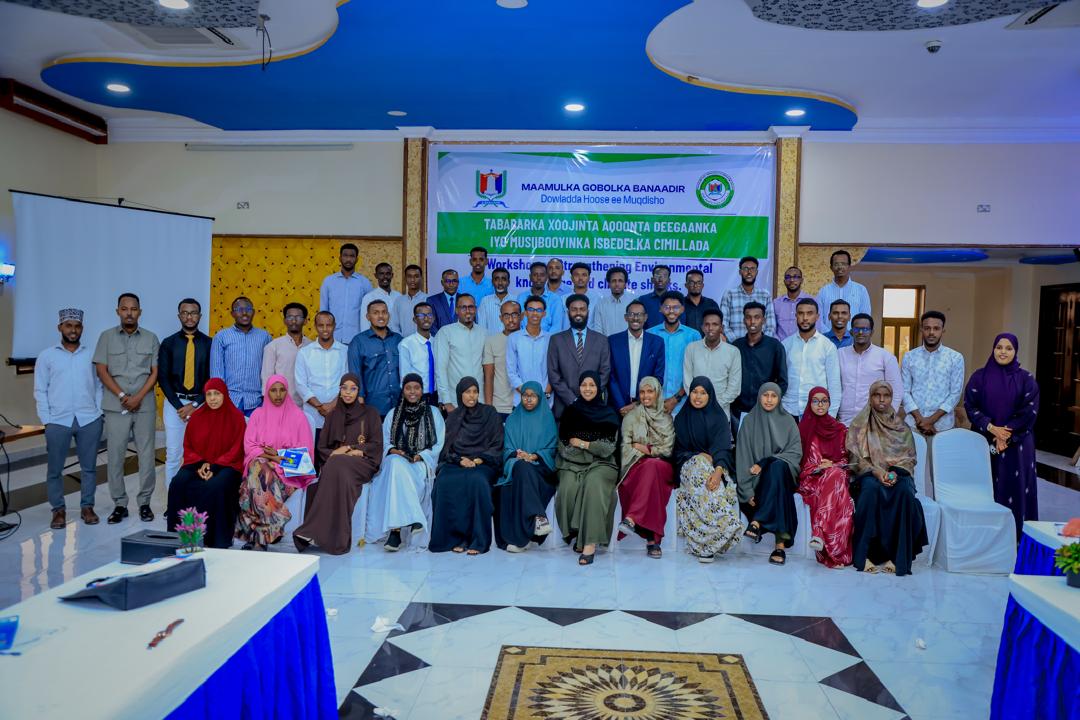
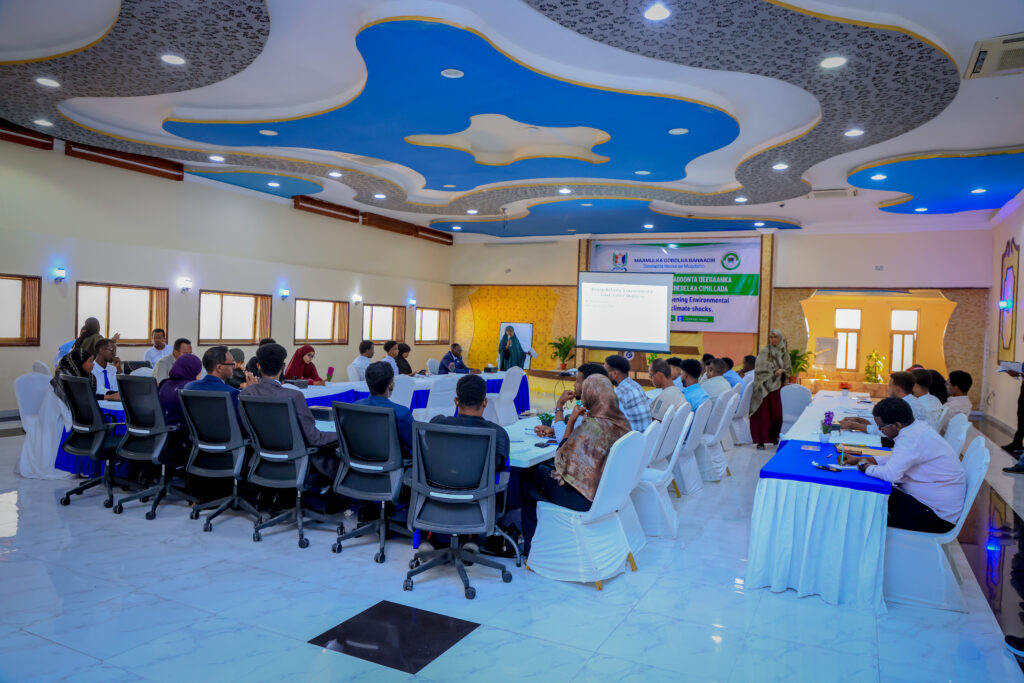
In a significant step toward strengthening urban climate resilience in Somalia, the Institute of Climate and Environment (ICE) at SIMAD University partnered with the Banadir Regional Administration (BRA) to deliver a three-day intensive workshop on “Strengthening Climate Change Knowledge and Prevention of Climate Shocks through Community Preparedness and Early Warning Improvements in Benadir.” Held from 15–17 March 2026 at Dorbin Hotel in Mogadishu, the workshop brought together 50 participants from across all districts of Benadir, including youth leaders, students, municipal staff, and community representatives. The initiative reflects a growing commitment to building local capacity and strengthening systems that can anticipate and respond to climate risks in an increasingly vulnerable urban context.
A Timely Intervention for a Climate-Vulnerable City
Mogadishu is facing escalating climate pressures, including recurrent flooding, environmental degradation, and rapid urban expansion that often outpaces infrastructure development. These challenges disproportionately affect vulnerable communities, particularly those in informal settlements and displacement contexts. In this setting, resilience must go beyond physical infrastructure—it must be rooted in awareness, preparedness, and coordinated institutional action. This workshop responded to that urgency by creating a platform where knowledge, experience, and practical solutions could converge, equipping participants with tools to better understand and address climate risks at the community level.
From Awareness to Action: What the Workshop Achieved
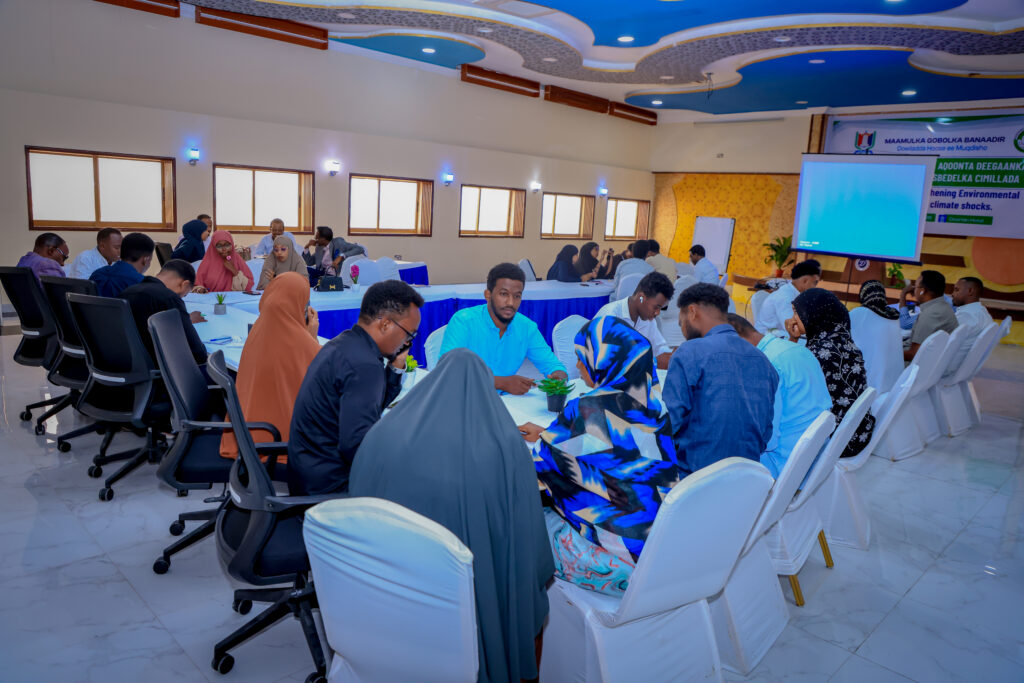
Over the course of three days, the workshop combined technical learning with locally grounded approaches to ensure relevance and impact. Participants engaged in interactive sessions that explored climate risks specific to Benadir, drawing on both scientific insights and Somali storytelling traditions (sheekooyin) to reflect on past experiences and collective responses. Practical sessions focused on household and community-level preparedness, while simulation exercises enabled participants to interpret early warning messages and practice timely decision-making. The discussions also highlighted the critical role of women and youth in strengthening preparedness and ensuring that information reaches communities effectively.
A key outcome of the workshop was the development of five community micro-preparedness plans (Qorshe Deegaan), each reflecting localized risks and actionable steps that can be implemented immediately. These plans represent an important shift toward community ownership of climate resilience.
Introducing Climate Champions: A Community-Led Model
One of the most impactful outcomes of the workshop was the identification of Climate Champions—individuals selected to lead awareness, preparedness, and early warning dissemination efforts within their communities. This approach signals a strategic shift from centralized response mechanisms toward community-driven resilience systems that are more responsive and sustainable.
Participants expressed a strong sense of empowerment and responsibility following the training. As Sahra Xiirey reflected, “This workshop opened our eyes to how we can prepare ourselves before disasters happen—not just react after.” Similarly, Muscab Abdirashid noted, “Young people now understand their role in spreading early warning messages and helping communities act on time.” These reflections underscore the transformative potential of investing in local leadership and knowledge.
A Strong Institutional Partnership
The collaboration between the Banadir Regional Administration and the ICE Institute demonstrates the value of linking policy, research, and community engagement. The active involvement of BRA leadership throughout the workshop—from opening remarks to closing reflections—highlighted strong institutional ownership and commitment to advancing climate resilience in the region. This partnership creates a foundation for sustained action, enabling the integration of workshop outcomes into government systems, policies, and future programming.
By combining ICE’s research and capacity-building expertise with BRA’s governance mandate, the initiative represents a model of how academic institutions and local authorities can work together to address complex development challenges.
Looking Ahead: From Workshop to System Change
The workshop marks the beginning of a broader process of institutional and community transformation. Moving forward, there is a clear opportunity to scale the model to additional districts, strengthen early warning systems, and formalize community-based approaches through policy and planning frameworks. The development of a Banadir Environmental and Climate Adaptation Policy will be a critical step in providing long-term direction and coherence to these efforts.
At the same time, activating and supporting the Climate Champions network will ensure that the momentum generated during the workshop is sustained at the community level. These combined efforts will contribute to building a more coordinated, inclusive, and resilient urban system in Mogadishu.
A Model for Fragile and Urban Contexts
Beyond its immediate impact, this initiative offers valuable lessons for other cities facing similar challenges. Mogadishu’s experience demonstrates that even in fragile and resource-constrained environments, it is possible to build effective climate resilience systems by leveraging community knowledge, strengthening institutional coordination, and adopting practical, scalable approaches.
Through this collaboration, the ICE Institute and the Banadir Regional Administration are advancing a vision of climate resilience that is proactive, inclusive, and locally grounded. The workshop has shown that meaningful progress begins with empowering people, strengthening institutions, and building systems that can anticipate and respond to future shocks. As Mogadishu continues on this path, it is not only addressing its own vulnerabilities but also contributing to a broader model of resilience for cities across Somalia and beyond.