
READ Project Kick-off Meeting held in Mogadishu
The Renewable Energy Advancement for Inclusive Development in Sub-Saharan Africa (READ) project was officially launched during a two-day Kick-off Meeting held in Mogadishu, Somalia, on 12–13 January 2025. The meeting was hosted by SIMAD University under the Erasmus+ Capacity Building in Higher Education (CBHE) framework and brought together partner universities from five different countries, alongside senior government officials, development partners, and representatives of diplomatic missions. The event marked the formal starting point of a collaborative initiative aimed at strengthening renewable energy education, research capacity, and institutional cooperation across Sub-Saharan Africa.

Day 1: Strategic Vision, Stakeholder Engagement, and Project Governance
The first day of the Kick-off Meeting focused on formally launching the READ project and building a shared understanding of its strategic direction. Following registration and informal networking, the project was introduced through a comprehensive overview delivered by the Project Coordinator, Mohamed Okash, who outlined the project’s objectives, structure, and expected outcomes. The discussion framed renewable energy education as a critical pillar for inclusive development, climate resilience, and long-term economic transformation in Sub-Saharan Africa.
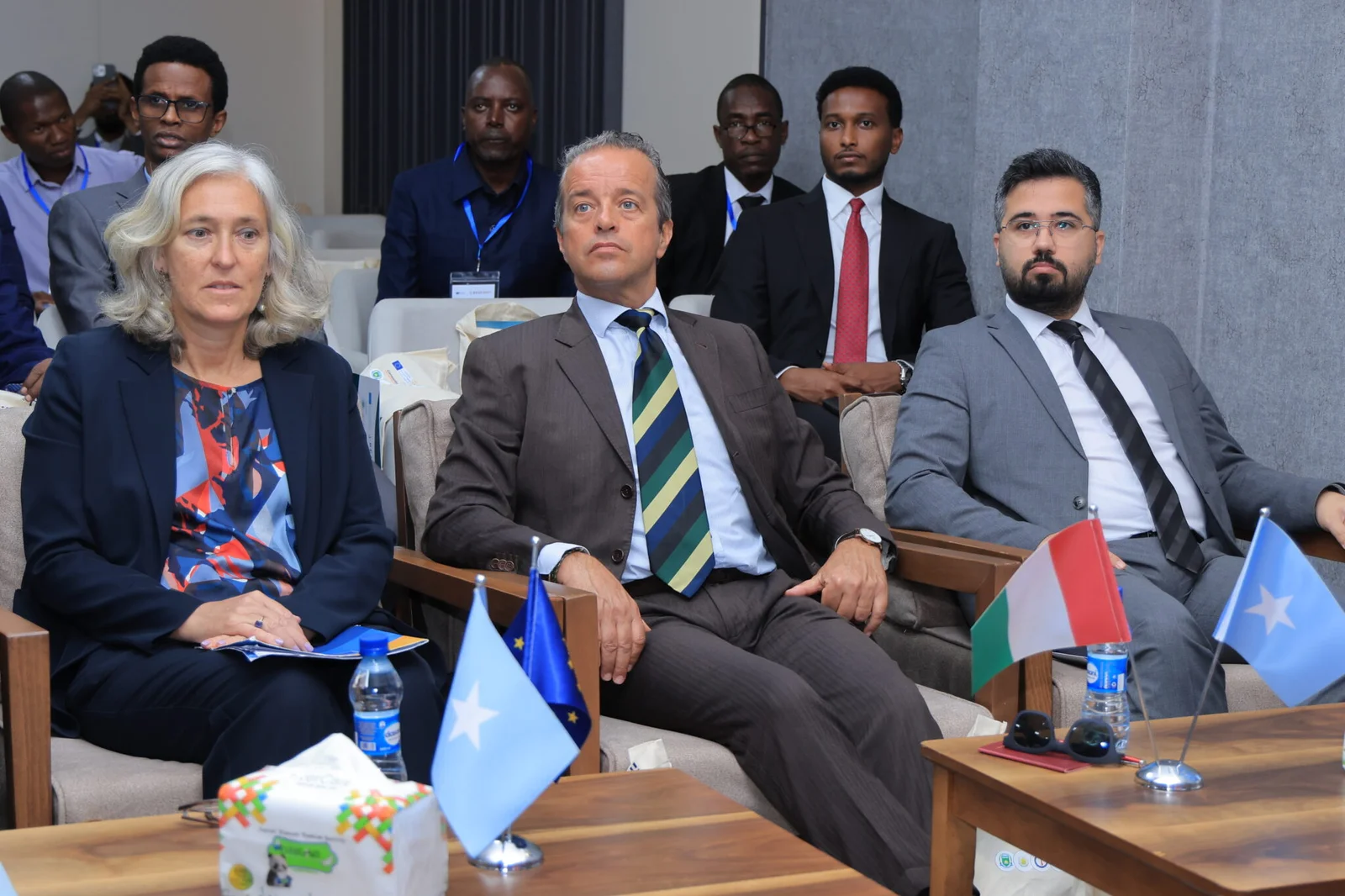
Opening remarks were delivered by senior representatives of host and partner universities alongside officials from relevant government institutions, international development partners, and diplomatic missions. Contributions from the EU side, including remarks by Francesca Di Mauro of the EU Delegation to Somalia, asserted the strategic importance of EU–Africa academic cooperation and the role of higher education in supporting sustainable energy transitions. Across the various interventions, speakers underlined the urgency of addressing skills gaps in the renewable energy sector, the responsibility of universities in fostering innovation and employability, and the need for long-term institutional partnerships. Importantly, the READ project was consistently linked to national and international priorities in energy, education, and climate policy.
An official project launch photo was taken during the day, symbolizing the collective commitment of all participating institutions and stakeholders from the five participating countries. This moment was followed by presentations from each consortium partner, during which institutions introduced their academic profiles, areas of expertise, and responsibilities within the READ project. Through these exchanges, the complementarities among African and European partners became clear, particularly in relation to curriculum development, capacity building, research collaboration, and dissemination. The consortium’s diversity in terms of geography, institutional mandates, and disciplinary strengths was widely acknowledged as a major asset for successful implementation.
Later in the day, a dedicated session on managing Erasmus+ CBHE projects provided practical guidance on financial management, reporting obligations, internal coordination, risk management, and sustainability planning. This session helped align partners around EU implementation standards and clarified compliance requirements. The first day concluded with a focused discussion on project governance, during which the Project Management Committee (PMC) was formally established. During its inaugural meeting, the PMC agreed on communication arrangements, decision-making procedures, and initial implementation timelines to set a clear framework for coordinated and transparent project management.
Day 2: Curriculum Development, Capacity Building, and Implementation Pathways
The second day of the Kick-off Meeting shifted attention from strategic framing to the technical and operational dimensions of the READ project. Sessions were organized around the project’s work packages and examined needs assessment, curriculum development, capacity building, quality assurance, dissemination, and sustainability in a more detailed and applied manner.
A central theme of the discussions concerned gaps in existing renewable energy curricula and the persistent mismatch between current academic programs and labor market needs across the five participating countries. Partners explored needs assessment approaches that combine reviews of existing curricula and policy documents with surveys, interviews, and focus group discussions involving academic staff, students, industry representatives, and policymakers. In this context, participants identified the significance of integrating problem-based learning, entrepreneurial skills, and innovation-oriented teaching methods. The experts proposed that renewable energy education must extend beyond technical knowledge to include practical and market-relevant competencies.
Capacity building sessions suggested the focus on training-of-trainers, research skills development, and the creation of platforms for sustained academic exchange. Several partners stressed that investment in renewable energy education is, at its core, an investment in people’s ability to understand, manage, and innovate with technology. Accordingly, research collaboration, joint publications, and academic conferences were discussed as essential mechanisms for strengthening institutional capacity and ensuring that the project generates long-term academic value in addition to teaching outputs.
Further discussions addressed quality assurance and monitoring arrangements, including internal and external evaluation frameworks designed to safeguard academic standards, relevance, and alignment with Erasmus+ requirements. Dissemination and exploitation strategies were also examined in detail, with attention given to engagement with policymakers, academic publishing, conferences, digital platforms, and media outreach. Partners agreed that sustainability would depend on embedding newly developed curricula within institutional structures, maintaining research collaboration beyond the project period, engaging with policy processes, and continuing to use project platforms after external funding ends.
The second day concluded with an open feedback session. Participants reiterated their commitment to collaborative implementation and highlighted the importance of coordination, realistic timelines, and mutual support across countries as the project moves into its implementation phase. The discussions reflected a shared sense of responsibility and a clear readiness to translate agreed plans into concrete action.

Key Outcomes of the Kick-off Meeting
By the end of the two-day meeting, the READ consortium had successfully launched the project, developed a shared understanding of its objectives and structure, and agreed on governance and coordination arrangements. The strong engagement of national authorities, academic institutions, and international partners confirmed the project’s relevance and credibility. Most importantly, the meeting generated clear momentum toward implementing renewable energy education reforms that are responsive to regional needs and aligned with broader development priorities.
Looking Ahead
The READ Kick-off Meeting in Mogadishu marked the beginning of a collaborative and multi-country process aimed at transforming renewable energy education in Sub-Saharan Africa. With a clear strategic direction, well-defined governance structures, and committed institutional partners, the project is well positioned to deliver sustainable academic and developmental impact in the years ahead.