
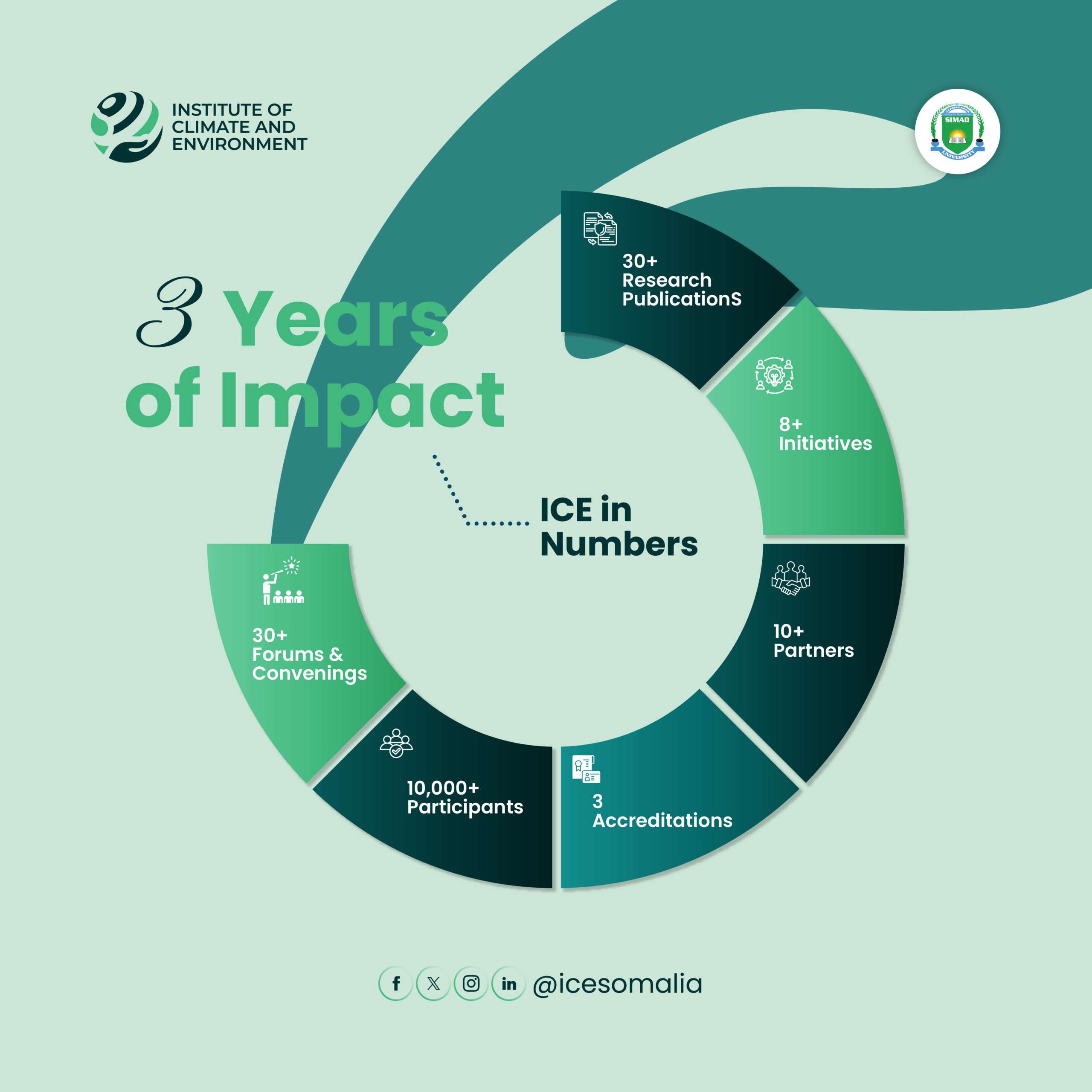
2025: Our Impact in Numbers
In a country where climate shocks shape daily life, 2025 became the year climate action in Somalia moved from intention to execution.
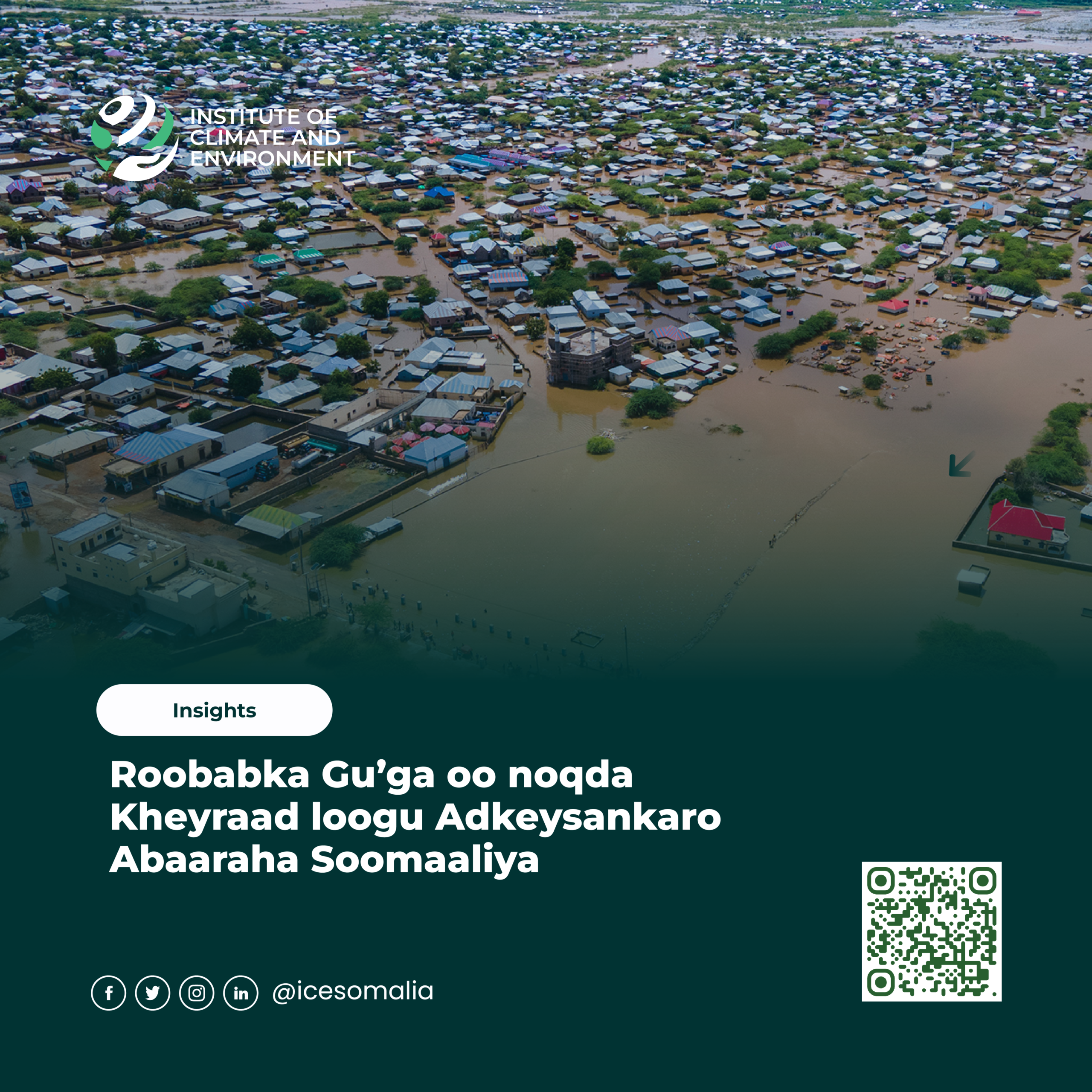
Climate change here is not abstract. It is felt in drought-hit farms, flooded neighbourhoods, rising food prices, and young people navigating uncertainty. For the Institute of Climate and Environment (ICE), 2025 was guided by one simple question: how do we turn climate concern into practical action that lasts?
This year marked a turning point. ICE moved from building foundations to delivering visible, measurable impact, grounded in evidence, driven by youth, and connected to policy.
2025 at a Glance
A. 1,000+ people trained in climate skills and leadership
B. 200+ youth graduated from Climate Justice Incubator II
C. 20+ peer-reviewed research publications released
D. 2 national policy reports published
E. 7 major regional and global climate forums represented
Building Climate Skills at Scale
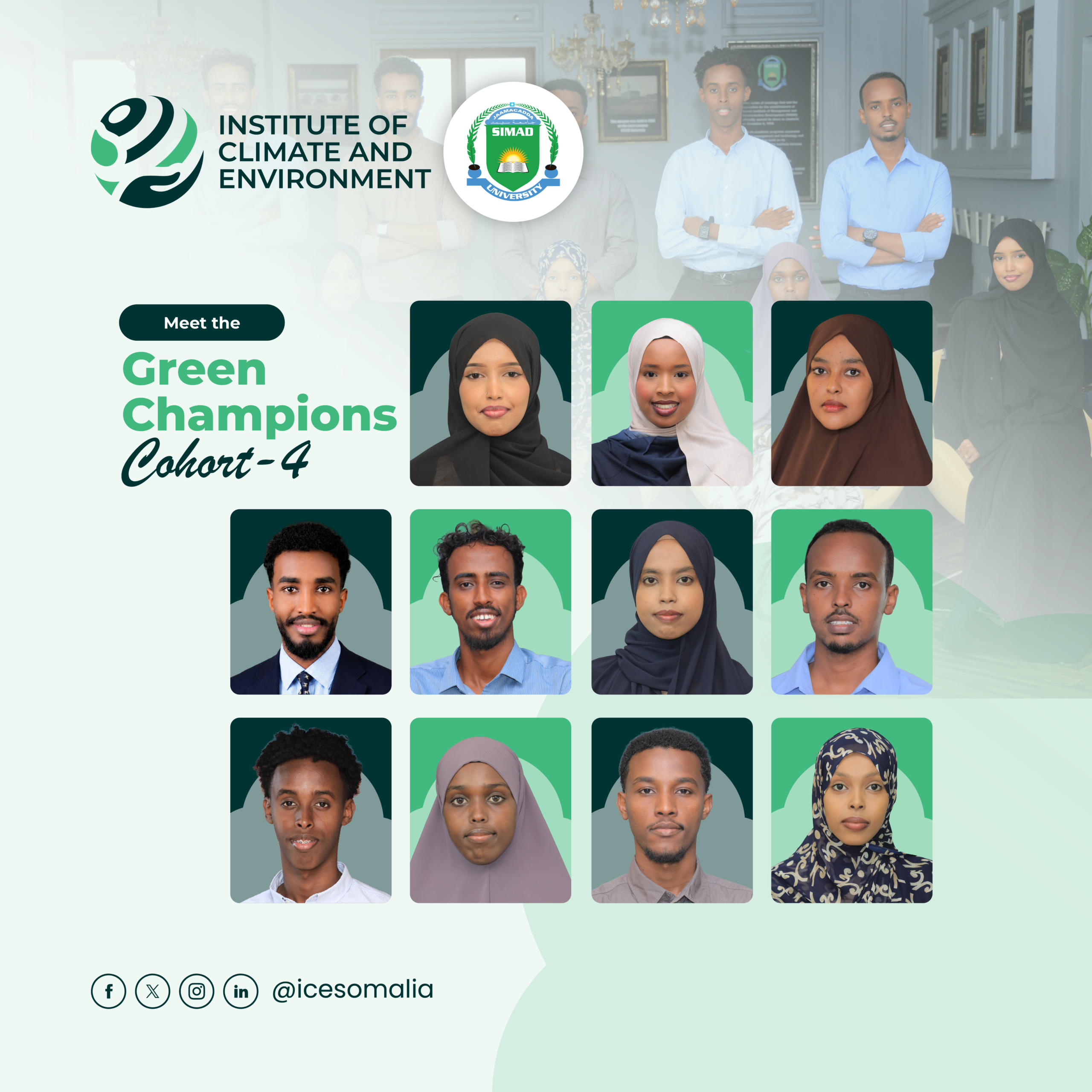
In 2025, ICE directly trained over 1,000 people across Somalia, including students, youth leaders, educators, civil society actors, and community members, many engaging with climate topics for the first time.
Through programs such as the Climate Justice Incubator II, climate literacy workshops, climate finance trainings, Pre-COP preparation sessions, and geospatial mapping workshops, participants gained practical skills in climate justice, leadership, data, finance, and advocacy. More than 200 young people completed the Climate Justice Incubator alone, emerging with the confidence to design projects, lead conversations, and engage institutions.
For many participants, 2025 marked their first time presenting a climate idea publicly or engaging policymakers with confidence.
Every training was built around one principle: climate knowledge must be usable, not theoretical.
Producing Knowledge That Matters
2025 was also a landmark year for research. ICE and its partners published more than 20 peer-reviewed journal articles, covering climate change, renewable energy, food security, governance, inequality, and environmental sustainability in Somalia and across Africa.
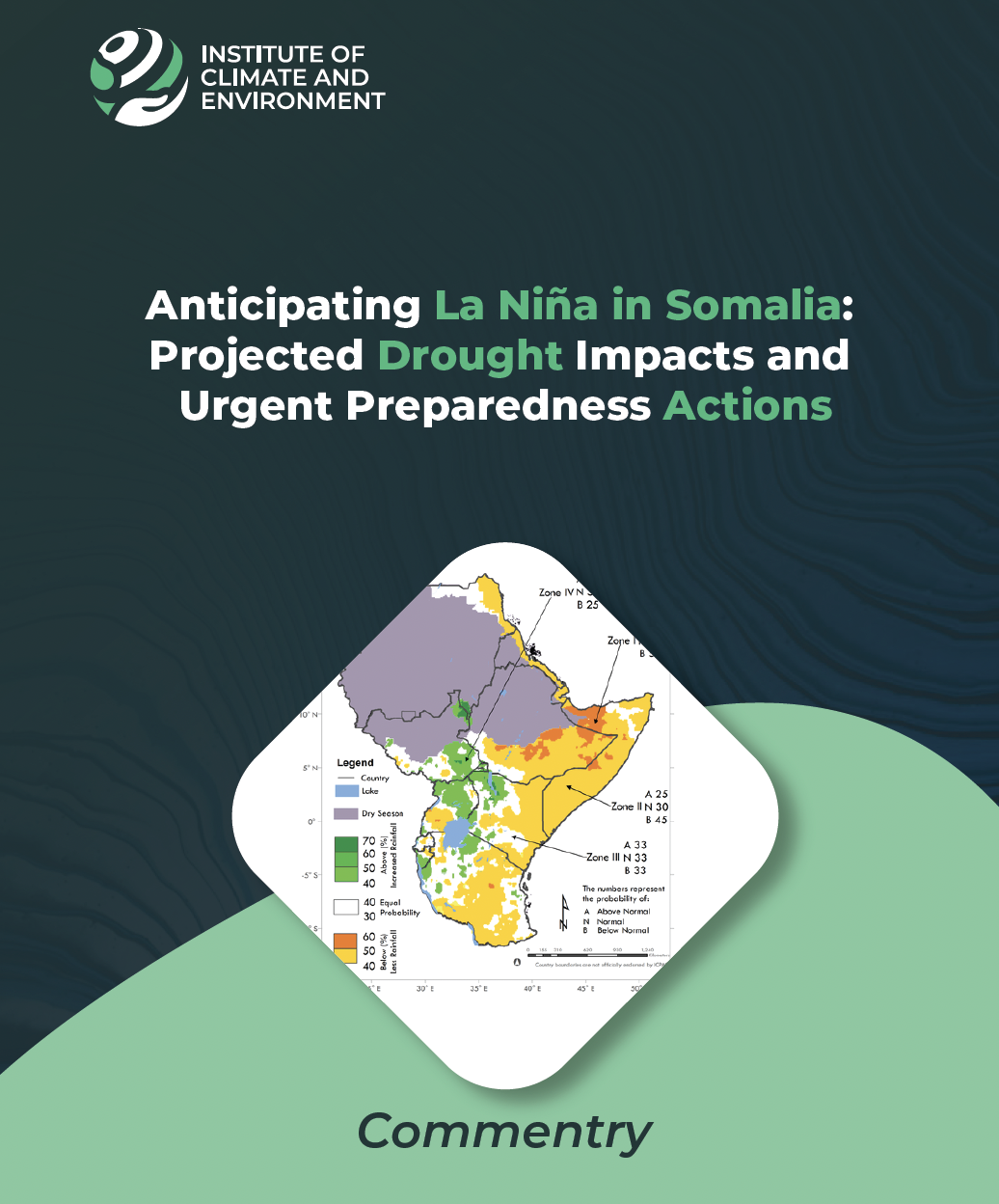
Beyond academic publishing, ICE released two major national policy reports: State of Climate in Somalia 2025 and Investigating the Role of Sustainable Youth Employment in Combating the Climate Crisis in Somalia. These reports translated complex data into clear policy messages, supporting decision-makers, development partners, and the media with evidence rooted in Somali realities.
For ICE, research is not an end in itself — it is a tool for better decisions.
Making Climate Knowledge Accessible
Understanding climate change should not require a technical background. In 2025, ICE invested heavily in climate communication to ensure knowledge reached beyond universities.
We launched the Climate Dictionary, translating key climate terms into Somali so students, teachers, and communities could “speak climate” with confidence. We introduced the Climate Action Toolkit, a beginner-friendly guide for young changemakers, and created new public dialogue spaces through Doog Debates and the Aaran Podcast.
Together, these platforms reached thousands online and offline, helping normalise climate conversations in everyday Somali life.
Taking Somalia’s Voice Global
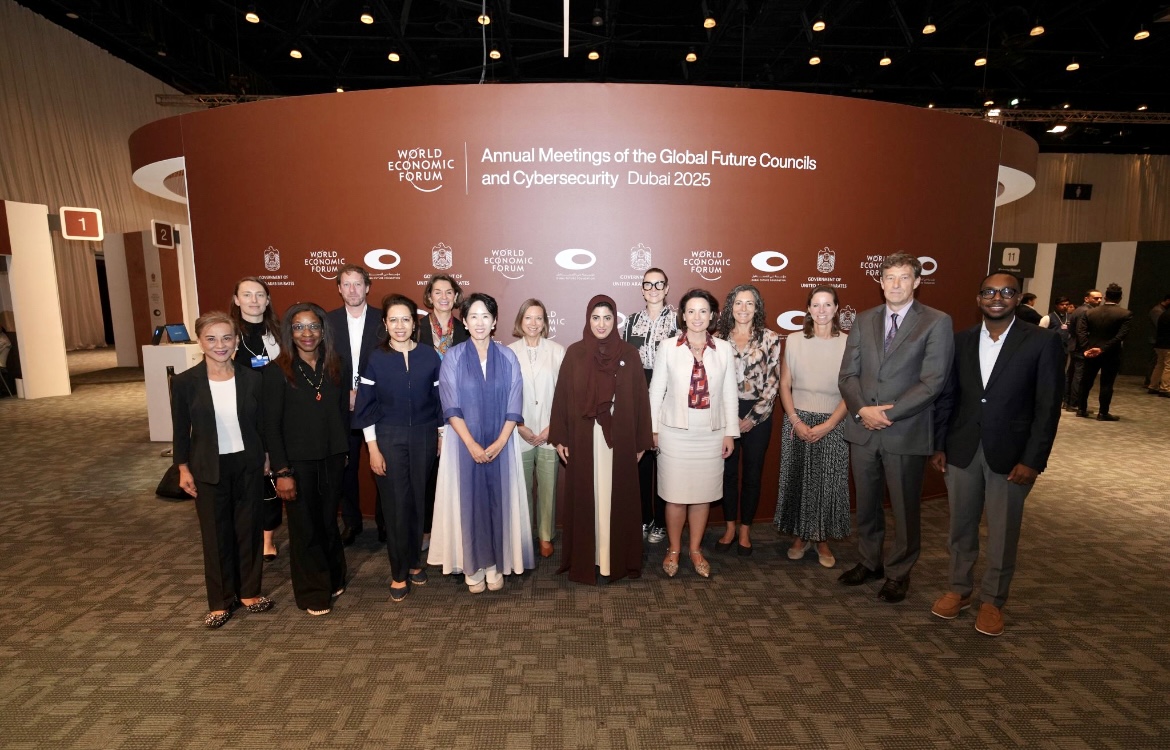
ICE also ensured that Somalia’s climate experiences were represented where global decisions are shaped. In 2025, the Institute participated in seven major regional and global forums, including COP30, the World Economic Forum’s Global Future Councils, the Dubai Future Forum, the LDC Future Forum, and the IGAD Scientific Conference.
These engagements were not symbolic. ICE contributed research, policy insights, and youth perspectives, while bringing global learning back home.
Institutional Milestones That Open Doors
Some achievements in 2025 fundamentally changed what is possible going forward. ICE became the first academic institution in Somalia accredited by UNEP, received UNCCD observer status, joined the Adaptation Research Alliance, and coordinated Somalia’s first EU-funded Erasmus+ Capacity Building project on renewable energy, leading a consortium of eight universities across Africa and Europe.
These milestones expand access to policy spaces, funding mechanisms, and long-term partnerships, strengthening Somalia’s position in global climate governance.
Why 2025 Matters
The numbers tell part of the story: 1,000+ people trained, 20+ research papers published, global platforms engaged, historic partnerships secured. The deeper impact lies in momentum.
In 2025, ICE helped shift the climate conversation in Somalia — from awareness to action, from isolation to partnership, and from vulnerability to leadership. The year demonstrated that even in fragile contexts, institutions can grow with credibility, young people can lead with confidence, and climate action can be practical, inclusive, and locally grounded.
As ICE moves into the next phase, the foundations laid in 2025 will shape a generation of climate leaders, policies, and institutions prepared for Somalia’s future. Climate action is no longer a promise; it is happening, and it is collective.